JUNE/JULY 2023
12 hrs - $240
(+ $30 model fee) Monday, June 19, July 3, 10 & 17 6 - 9 pm Location: The Oklahoma Academy of Classical Art 12 E. Burton Place, Edmond, OK 73013 |
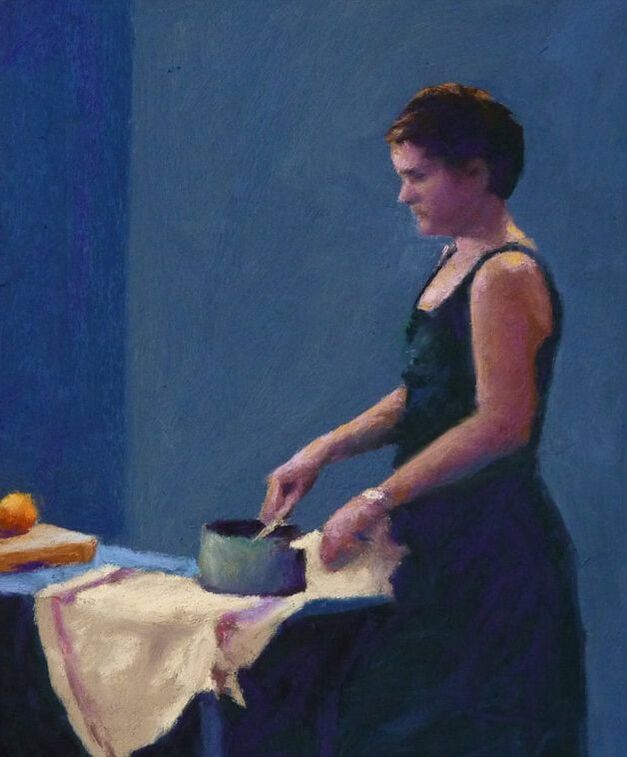
THE COSTUMED FIGUREThere is real benefit and personal satisfaction in depicting daily life in our paintings and drawings. In this course we'll study the clothed figure while in a staged, yet naturalistic environment. We'll focus on organizing the scene using a step-by-step approach with a strong emphasis on design and composition, drawing accuracy, gesture, color and value harmonies and capturing the essence of the pose. Students will perform skill building exercises and time permitting, will work toward accomplishing two finished pieces from two different scenarios.
Students may choose their medium and either draw or paint. Suggested materials lists will be provided on enrollment. |
MAY/JUNE 2023
12 hrs - $240
Monday, May 8 & 15 and June 5 & 12 6 - 9 pm Location: The Oklahoma Academy of Classical Art 12 E. Burton Place, Edmond, OK 73013 |
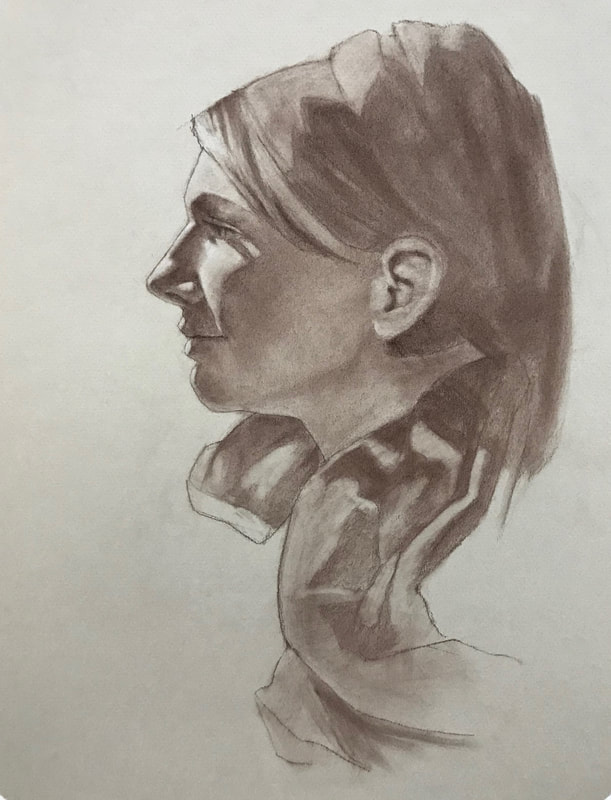
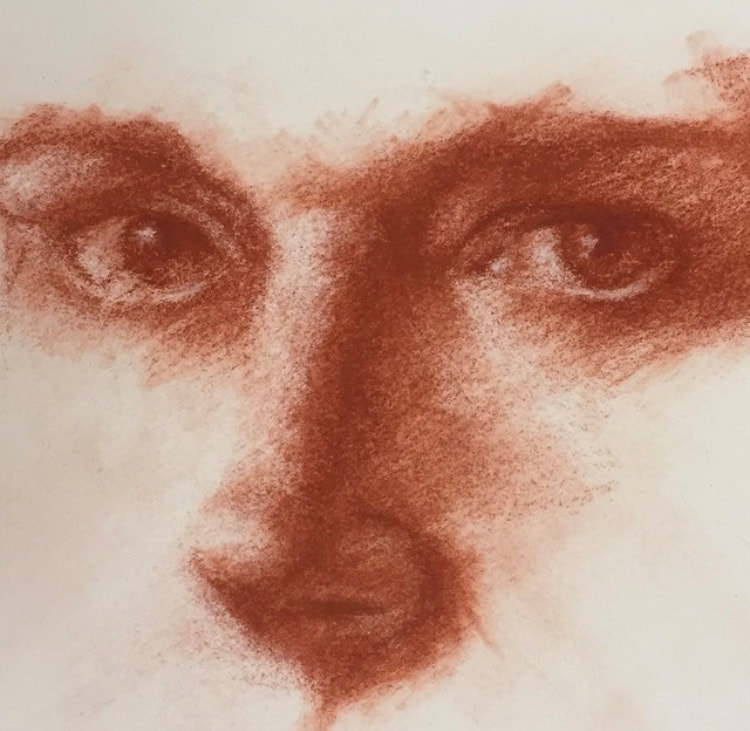
DRAWING THE SELF-PORTRAITThe art of depicting oneself in a self-portrait dates as far back as ancient Egypt. There is a famous artist throughout every period and within every art movement who has represented themselves in a "selfie". Rembrandt himself made at least 60 portraits of himself over the course of his lifetime. The self-portrait is a time honored practice and is an excellent and affordable approach to learning how to achieve a likeness. In this course, we will study the self-portrait using Conté Crayon, paper and a mirror. Through a step-by-step process, we'll study the fundamentals of portraiture with a strong emphasis on mark making, shadow massing, and comparative and visual measuring. The course will result in a confident and expressive portrait of you!
|